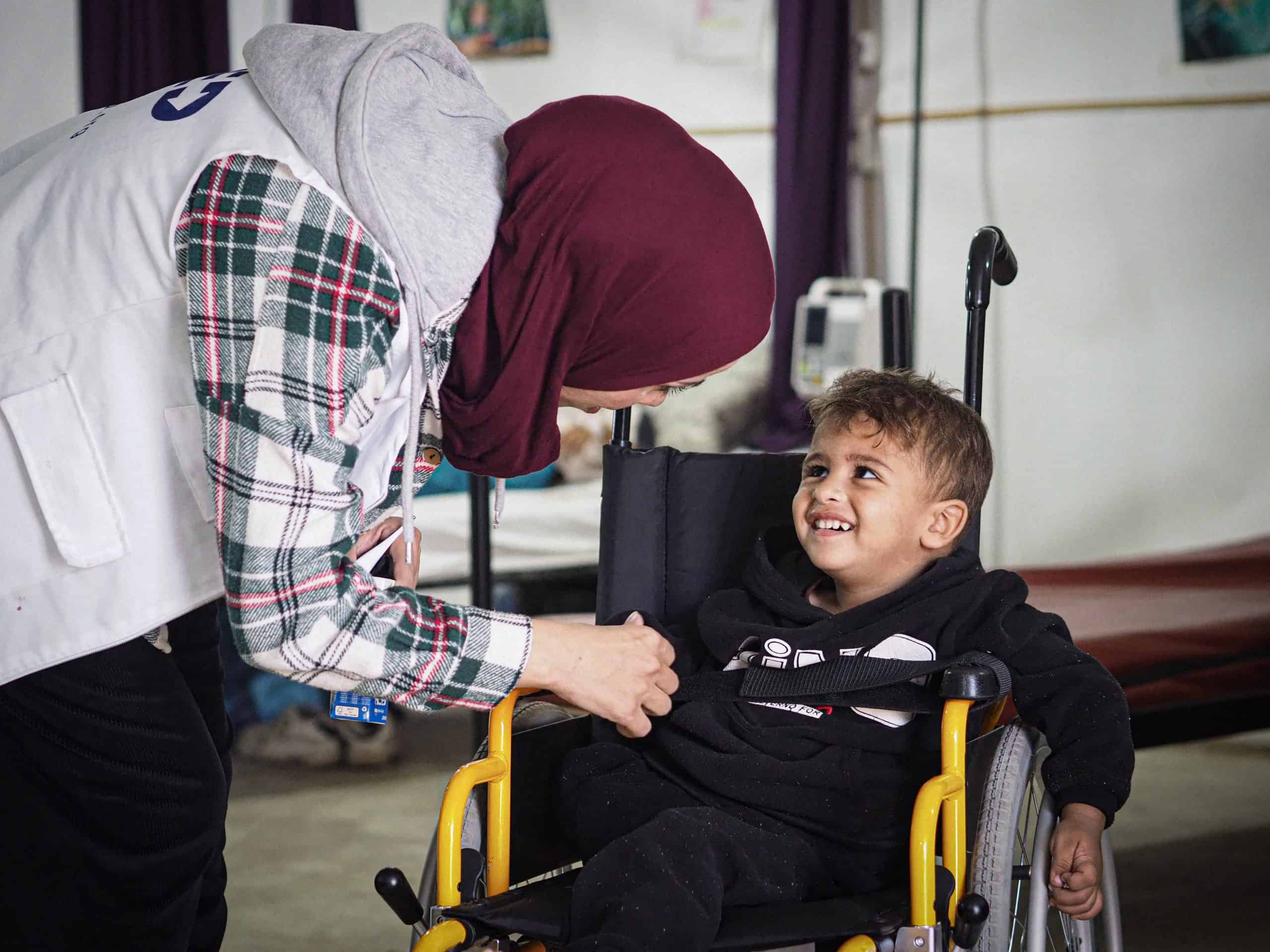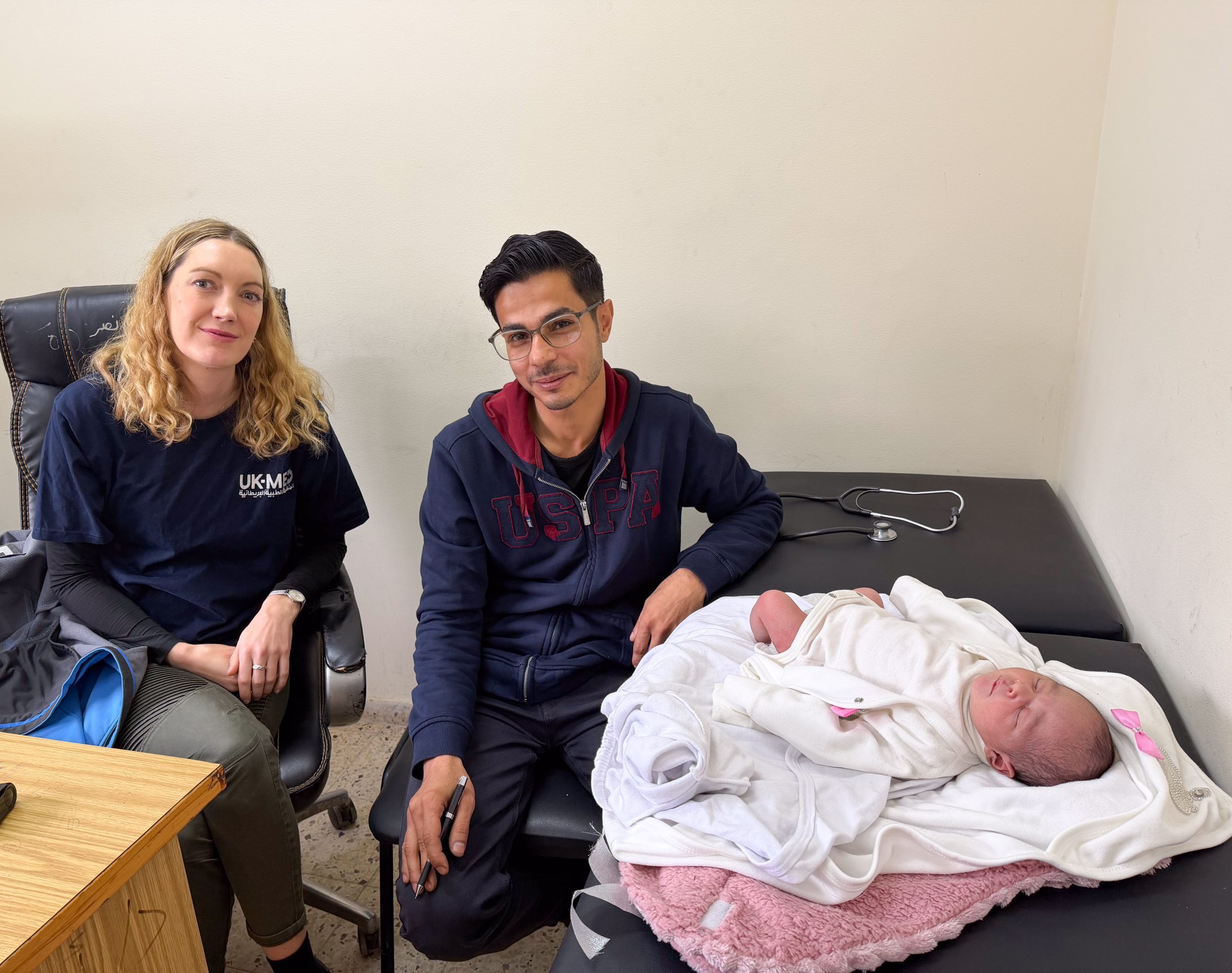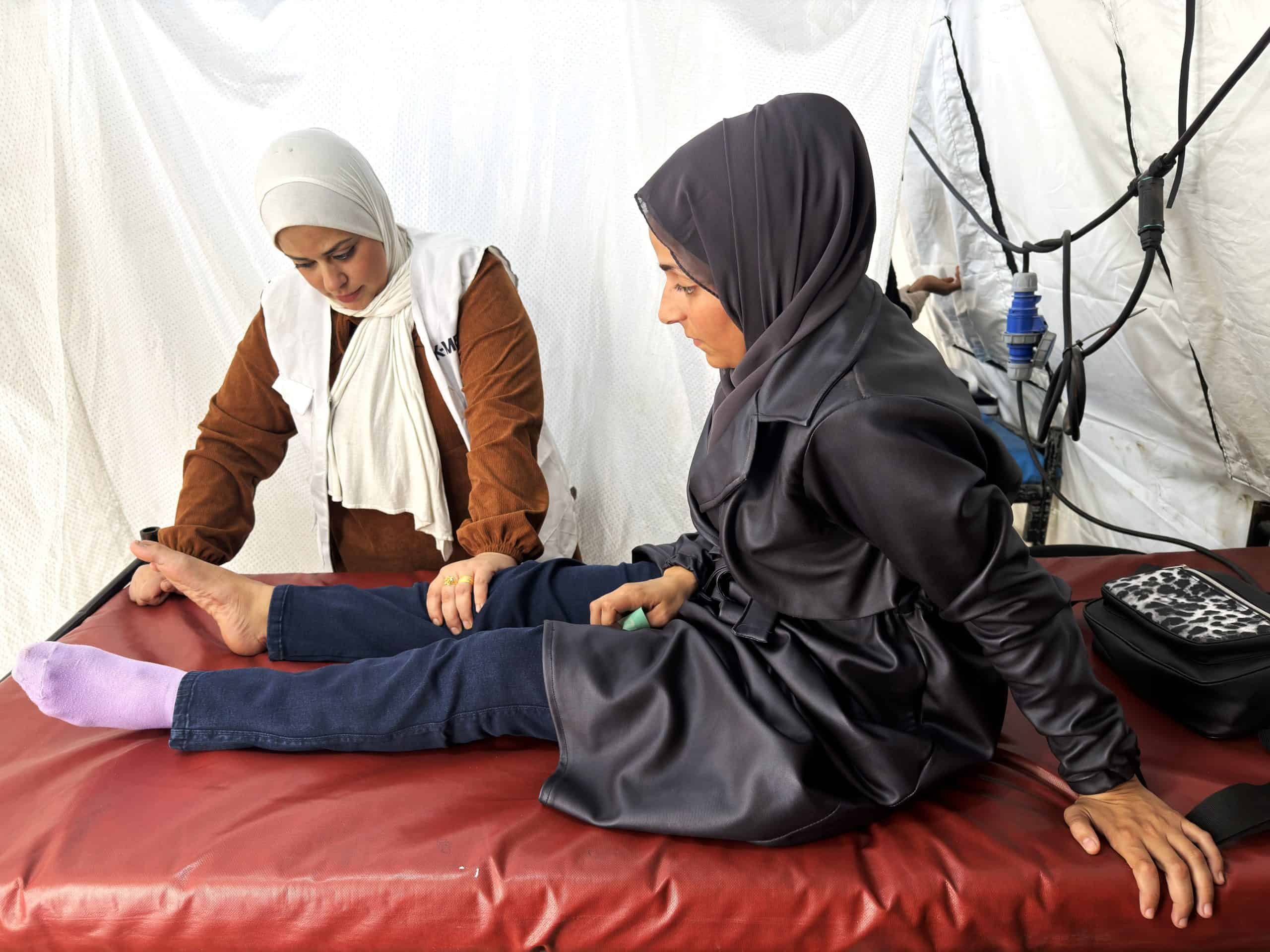


Delivering vital health care involves many challenges, but not all these challenges are medical. Alongside the dedicated doctors, nurses, midwives and other staff providing continued clinical care to thousands of patients at our field hospitals in Gaza, and at Nasser Emergency Department (NMC, ED), is the logistics team.
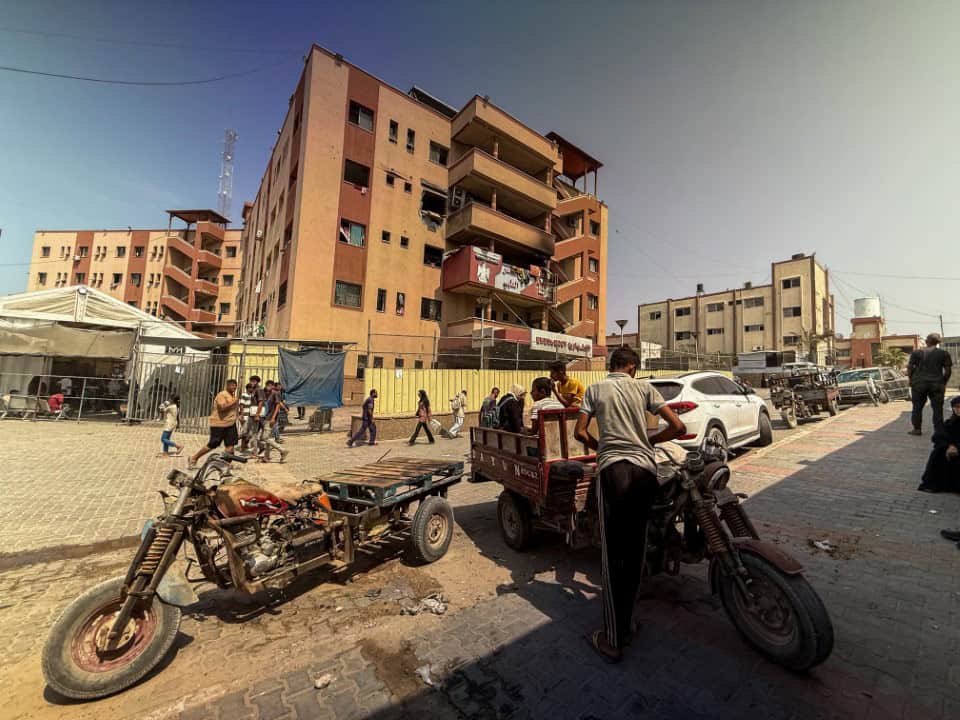
Without these resourceful and flexible people, the entire operation would grind to a halt. They are the backbone of the care that UK-Med delivers. A perfect example of this is their work under challenging circumstances at NMC ED, one of the last partially functioning hospitals left in Gaza.

UK-Med, with support from WHO through the generous contribution from the European Union, have played a significant part in keeping the hospital open and able to deliver life-saving care. In July 2024 our logistics team, local staff and UK-Med’s Dr. Paul Ransom, designed and built an ancillary triage area, adjacent to the Emergency Department. This additional space allowed for a better flow of patients through the hospital system, based of severity of need.
During mass casualty incidents, when every second counts, staff and facilities can be used more effectively to treat the most seriously injured first, helping to save lives.
The triage centre is not the only solution from the team though. As patient numbers soared during the peak of the conflict, the hospital ran out of beds. Critically ill patients would have to be treated on the floor with staff quite literally on their knees providing care.

Recognising this, the logistics team set about ‘creating’ some beds. With scarce resources in Gaza, this required thinking outside of the box, and the team soon found a way forward. A nearby scrapyard provided the answer. Using scrap and old discarded beds, the team were able to create 30 repurposed beds for the hospital, meaning more patients could be treated with dignity in a bed rather than on the emergency department floor.
Support for NMC has been ongoing outside of the main building too, where UK-Med and WHO have established a large external ward for non-critical patients. This additional covered space allowed for multiple beds and nurses stations, dealing with patients needing essential care.
Given this external ward is a temporary structure, it faced additional challenges to keep functioning. The UK-Med team have maintained and improved the area, including installing a large sunshade to keep a cooler temperature during the intense summer heat.

The team were also on hand to assist when challenges occurred. One such incident involved the entire area being flooded with sewage after an airstrike hit a mains sewage pipe nearby.
Logisticians and WASH (water, sanitation and hygiene) engineers assisted WHO and UNICEF teams to clear, clean-up and sterilise the area after this incident, allowing the facility to be back up and running again within days.
Our medical teams are nothing without the logisticians and the services they provide. With support from WHO through contribution from the European Union, UK-Med has provided nearly 500,000 patient consultations in NMC since June 2024.
As the fragile ceasefire offers a momentary pause, life for patients and staff at Nasser Medical Complex remains far from stable. Winter conditions, colder temperatures, heavy rain and deteriorating living conditions are placing additional strain on an already overstretched hospital, increasing the risk of illness and complicating recovery for the most vulnerable.
Nasser Medical Complex continues to stand as a lifeline for the people of southern Gaza – kept operational through determination, ingenuity and the unwavering commitment of teams who refuse to let care stop when it is needed most.